RE: From High-Value Hubs to Inclusive Bridges
Architecting a Healthy and Intentional Pan-African Growth Engine
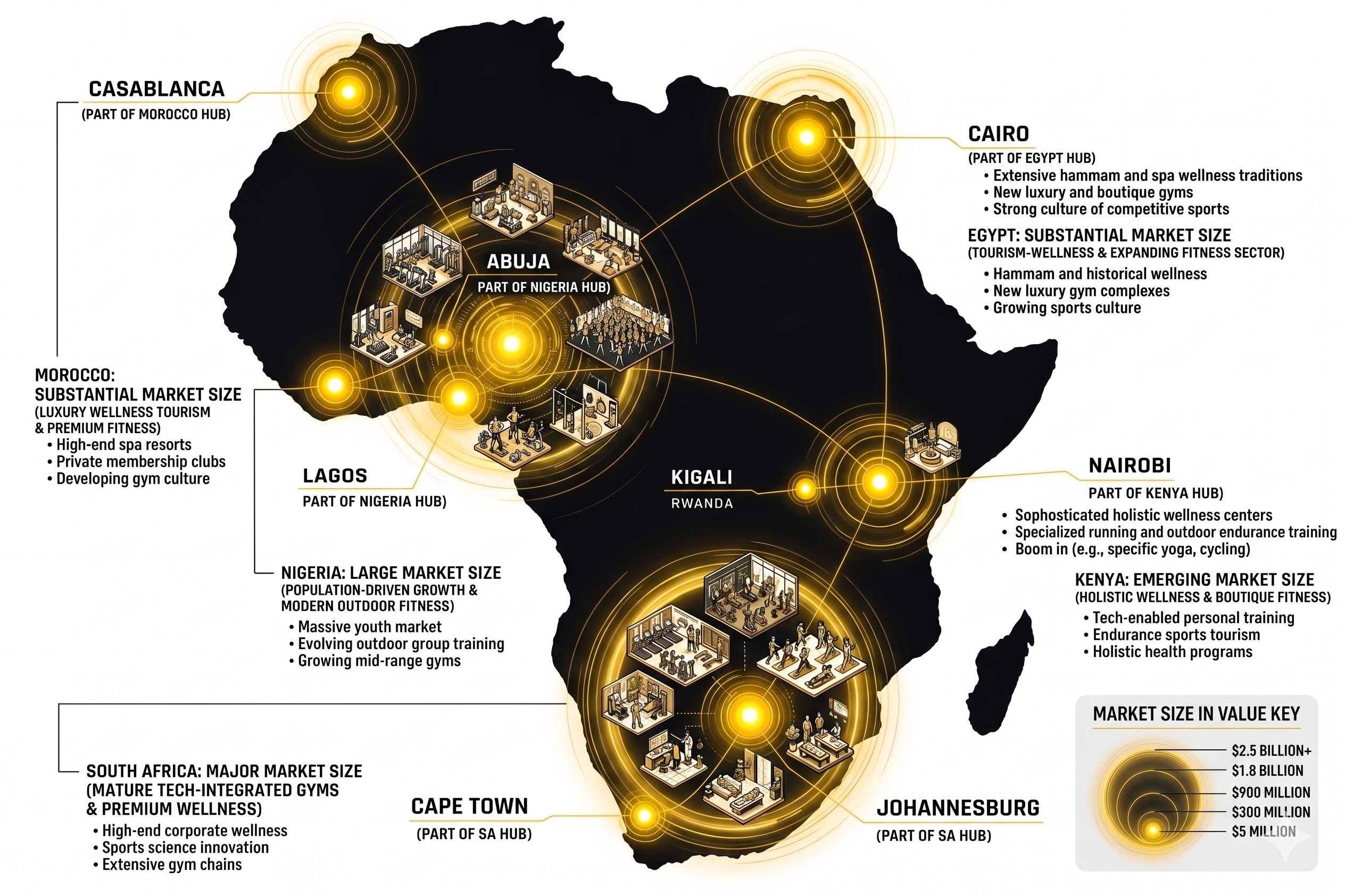
The infographic tells an exciting story: Africa’s wellness economy is no longer emerging. It’s arriving! Across the continent, major cities are becoming powerful hubs for fitness, health, and wellness investment. For business leaders, investors, and policymakers, the instinct is obvious: identify the biggest opportunities and move quickly to capture them.
And that momentum is worth celebrating.
The rise of professional fitness brands, digital wellness platforms, sports science, and health-conscious consumers signals a major shift in how Africans are thinking about well-being. What was once considered niche is becoming mainstream. The market is growing, investment is increasing, and the appetite for healthier lifestyles is stronger than ever.
But…
The biggest opportunity may not be the size of these individual markets. It may lie in how we connect them.
Moving From Competition to Collaboration
When we look closely at Africa’s wellness landscape, something interesting becomes clear: different regions are developing different strengths.
South Africa has built strong capabilities in corporate wellness, sports science, and large-scale gym infrastructure. Kenya is carving out a space in boutique fitness, endurance training, and tech-enabled coaching. Nigeria’s fast-growing, community-driven fitness culture reflects the energy and scale of its population.
That diversity is a strength.
The future of Africa’s wellness industry shouldn’t be about copying the same luxury gym model across every city. It should be anchored on a connected ecosystem where each market contributes something unique.
Imagine a wellness app developed in Nairobi, integrating seamlessly with fitness communities in Lagos, while drawing on research and best practices from Johannesburg. That kind of cross-border collaboration could accelerate growth for the entire sector.
The real opportunity lies in sharing ideas, talent, technology, and knowledge across the continent, not just competing for market share city by city.
Growth Must Include More People
There’s another important reality behind the growth numbers.
Most of the visible expansion today is happening in premium, urban wellness markets. High-end gyms, boutique studios, luxury wellness experiences, and digital subscriptions are growing quickly. And they play an important role in building the industry.
But long-term success depends on something bigger: accessibility.
If wellness only becomes more sophisticated for the top tier of consumers, the health gap across society could widen. A healthy industry cannot thrive if millions of people remain priced out of the very services designed to improve well-being.
That’s why the next phase of growth matters so much.
The knowledge, infrastructure, and investment flowing into major hubs can also support more affordable, community-driven wellness models. Hybrid fitness programs, low-cost digital access, local community initiatives, and scalable wellness education all have the potential to reach far beyond affluent urban centres.
Inclusion is not just the right thing to pursue socially. It’s also the smartest long-term economic strategy.
The Next Great Wellness Hubs Are Already Emerging
While major cities dominate most conversations, some of the continent’s most exciting innovation may come from emerging ecosystems.
Cities like Accra, Kigali, and Dakar are quietly developing their own wellness identities, blending modern fitness trends with local culture, community, and tradition.
That local innovation matters.
Africa already has deep traditions around movement, nutrition, healing, and community wellness. The strongest future ecosystem will be one that embraces those local perspectives while empowering entrepreneurs, trainers, creators, and health innovators across the continent.
Supporting regional talent development and homegrown solutions will make the industry more resilient, and more authentically African.
Building More Than a Business Sector
Africa’s wellness economy is entering an exciting chapter. The growth is real, the momentum is undeniable, and the opportunity is enormous.
But the next phase should be about more than scaling businesses or expanding premium markets. It should be about building a connected, inclusive ecosystem that improves health outcomes for more people across the continent.
If we get this right, those growing circles on the map won’t simply represent concentrated wealth or investment. They’ll represent something far more meaningful: a collective commitment to the well-being of Africa’s people.
About This Newsletter
Africa is the world’s last great frontier for health infrastructure. We envision a future where we aren’t just building hospitals; we are designing the systems that will define human life extension for the next century. RE:Iterate is a weekly dispatch for the builders, investors, and policymakers who recognise that the path to a “Blue Ocean” in longevity isn’t a straight line. It’s a series of feedback loops. We document the experiments, the failures, and the breakthroughs in real-time as we engineer a healthier, longer-living continent.